• Home >
  • Blog >
  • Why Your Facebook Page Isn’t a Website (And What It’s Costing You)

Why Your Facebook Page Isn't a Website (And What It's Costing You)

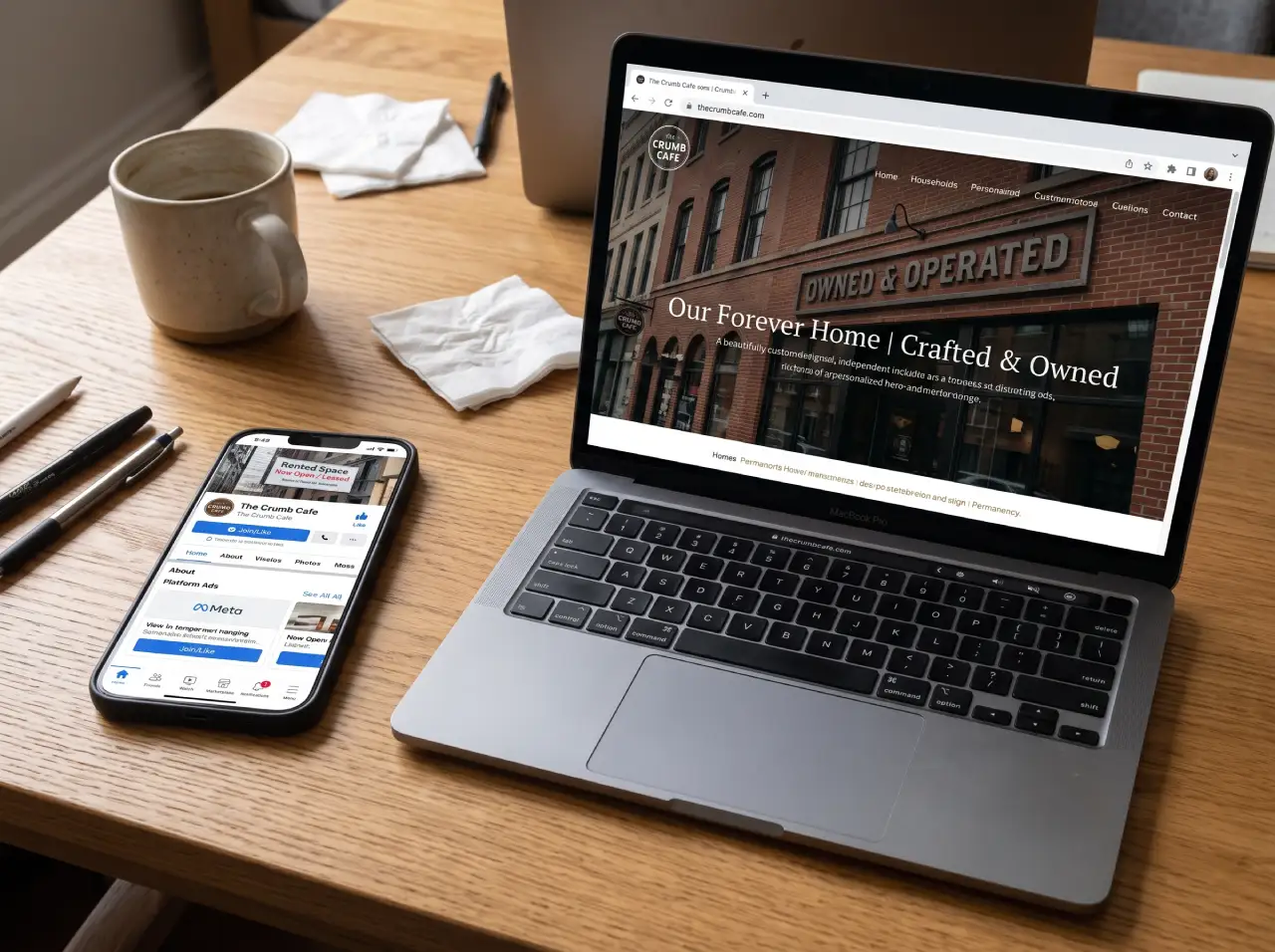
A smartphone showing a Facebook business page next to a laptop showing a website, with a subtle contrast between a rented sign and an owned storefront

“I already have a Facebook page, so I don’t need a website.” I hear this constantly from business owners in the Philippines, and I understand where it comes from. The Facebook page is where the messages come in, where the orders happen, and where the followers are. From the outside, it looks like it is doing the job of a website. So why build one?

Because a Facebook page and a website are not the same thing, and treating them as interchangeable quietly costs you customers, trust, and control. None of which shows up on your monthly report.

Your Facebook page is rented space, not an asset you own. It brings in customers, and you should keep it, but it does not replace a website. A website is the only place you control: customers can find you on Google, you own your customer list and your content, and you build trust that no third-party platform can take away. Facebook decides who sees your page, what it looks like, and what it can charge you to reach your own followers. A website is yours.

Key Takeaways

  • Facebook owns your page. You own a website. That single difference affects everything else.
  • A Facebook page is nearly invisible on Google. A website is how new customers find you when they search.
  • On Facebook, you pay to reach people who already follow you. On a website, your content works for you for free, forever.
  • You can lose your Facebook page overnight through no fault of your own. You cannot lose a website you own.
  • The right setup is both: Facebook for reach and conversation, a website for trust and ownership.

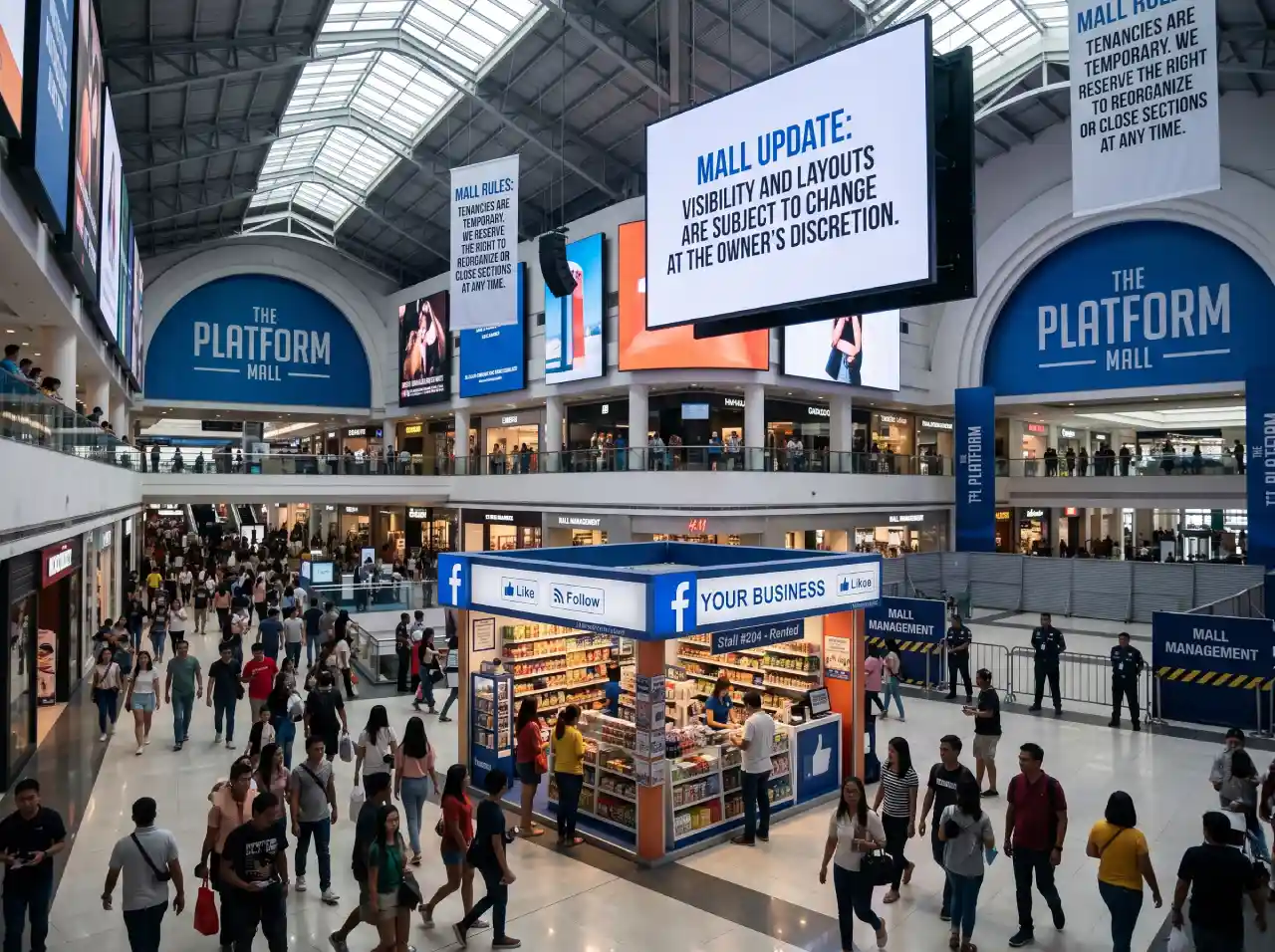
A busy indoor mall named "The Platform Mall" with a small Facebook-branded stall labeled "Your Business" in the center, surrounded by crowds and giant screens announcing mall rules and layout changes, illustrating a rented storefront on a third-party platform.

You Rent the Storefront

Think of your Facebook page as a stall inside someone else’s mall. It is a great place to be seen, and the foot traffic is real. But the mall owner sets the rules. They decide which stalls get shown to which visitors, they can change the layout whenever they want, and if they ever close the mall, your stall goes with it.

A website is your own store on your own street. You set the rules, you control the experience, and nobody can evict you. That is the difference in one image, and it is why “I have a Facebook page” is not the same as “I have an online presence I control.”


Google Can’t See Your Facebook Page (Not Really)

This is the part most business owners miss, and it is the most expensive one.

When someone in the Philippines needs a product or service, they usually do not open Facebook first. They search Google. And when they search, Google shows them websites, not Facebook pages. Your Facebook page might rank for your own business name, but it will rarely show up when someone searches for the thing you sell. Your competitors with websites will be there instead.

That means every customer who finds a business through Google is a customer who never found yours. The Facebook page feeds the people who already know you. The website is what pulls in the people who do not.


You Pay to Reach Your Own Followers

Facebook’s business model has a sharp edge, and it points at the business owner. You spend years building a following, and then Facebook charges you to actually reach them. A post on a business page reaches a fraction of your followers unless you boost it, and the reach has been falling for years.

A website inverts that math. When you publish content there, it belongs to you and it keeps working. A blog post that ranks on Google brings in visitors for years with zero ad spend. The more you publish, the more of the internet you own, and nobody can throttle your reach or raise the price to talk to your own audience.


Trust Lives on a Website

There is a quiet signal a website sends that a Facebook page cannot. When a customer checks out a business and finds only a Facebook page, part of them wonders if the business is real, or new, or small. A website with a proper domain, especially one with real content, a clear service list, and honest pricing, answers that question before they even ask it.

This matters in the Philippines, where people are understandably cautious about getting scammed. A website is not just a brochure. It is proof that you are established enough to invest in yourself, and that you are findable, reachable, and accountable. Facebook can lend you reach, but it cannot lend you credibility.


You Can Lose It Overnight

This is not a hypothetical. Business pages get hacked, locked, and suspended every day. An algorithm change, a mistaken report, or a policy shift can take your page down, and getting it back can take weeks, or not happen at all. Every customer, every review, every piece of content you built there can vanish through no fault of your own.

A website does not have that single point of failure. It lives on your domain, on hosting you control, with backups you own. If a platform changes its rules, you are unaffected. If a designer disappears, you take your files to another one. That is what ownership means, and it is the reason a website is the foundation and everything else is a channel on top of it.


Use Both, But Build the Foundation

None of this means you should delete your Facebook page. You should not. Facebook is still where a huge share of Philippine customers discover and message businesses, and it is the fastest way to reach people where they already are. The point is not Facebook or a website. It is Facebook and a website, each doing the job it is good at.

Facebook is your megaphone and your front desk. The website is your storefront, your address, and your asset. When the two work together, a Facebook post that leads to a website page that actually converts, you stop renting your entire presence and start owning it.


What to Look For in Small Business Website Design Services

If you are ready to build the part you own, look for small business website design services that put you in control from day one. A good provider builds on WordPress, hands you full ownership of the files and content, and bakes SEO in so the site can show up on Google. My small business website design services do exactly that, so the website you build becomes an asset you keep, not another rented page. And if you are not sure what a site should cost, my guide to how much a website costs in the Philippines lays it out plainly.
Table of Contents

    About the Author

    Jude Pudlao is a freelance web designer and SEO specialist based in Baguio City, Philippines. He builds WordPress websites for small businesses that need to get found on Google and convert visitors into customers.

    His work combines design, development, and search optimization so his clients get websites that look professional and actually perform.

    Let's work together.

    Over 6 years of experience. Results you can measure. Websites that do the selling for you.

    Frequently Asked Questions

    Do I need a website if I have a Facebook page?

    Yes, if you want to be found on Google, own your customer relationships, and not depend on a platform you do not control. Facebook is a powerful channel, but it is rented space. A website is the asset you own.

    Rarely, and almost never for the products or services you sell. Google surfaces websites for most searches. A Facebook page might rank for your exact business name, but it will not bring in the customers searching for what you offer.

    They serve different jobs, so the honest answer is both. Facebook is better for reach and conversation. A website is better for trust, Google visibility, and long-term ownership. Build the website as the foundation and use Facebook as a channel on top of it.

    Your reach (you pay to reach your own followers), your credibility (a Facebook-only business reads as less established), and eventually the page itself (pages get hacked and suspended every day with no recourse you control).

    A custom website in the Philippines typically costs a one-time build fee plus monthly hosting, but the honest comparison is this: a website is a one-time build cost for an asset you keep, while a Facebook page is rented space you keep paying for in reach. See my guide to how much a website costs in the Philippines for the full picture.

    Latest Posts

    Two laptop screens side by side, one showing a WordPress editor and one showing a visual drag and drop builder, on a clean desk
    A laptop showing a WordPress dashboard with security, backup, and update status panels, with a Philippines map pin on the desk while a person facing at the screen
    A split desk setup with a laptop showing an AI drafting interface on one side and a notepad with a handwritten pen draft on the other, a subtle Philippines map node in the corner

    Ready for a website that actually brings in clients?

    Web design, SEO, and content handled by one person who knows how all three fit together. Based in Baguio City, working worldwide.

    Scroll to Top